
Ancient Civilizations and Artistic Traditions of these Civilizations.
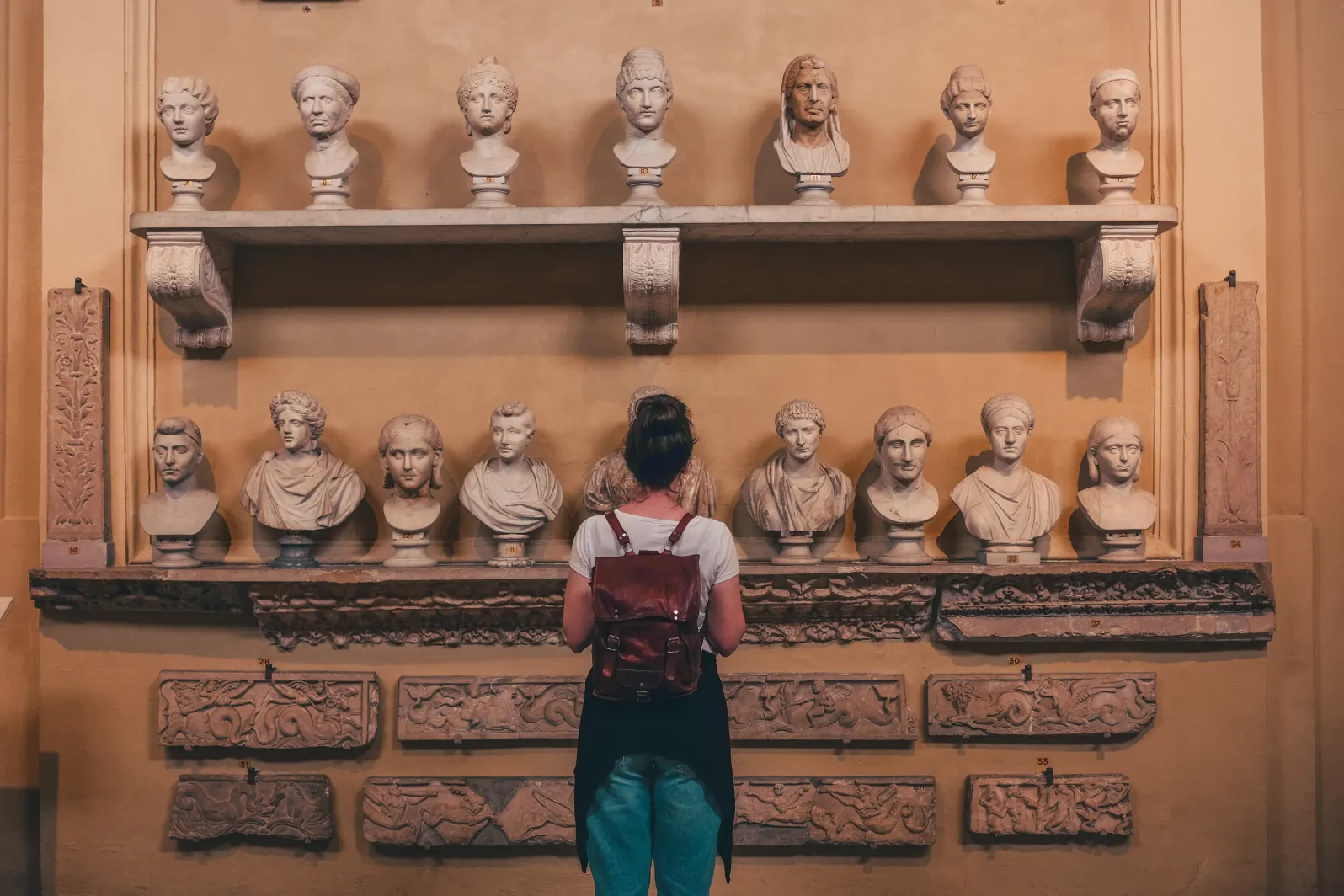
With the development of human societies, art developed, and this progression continued as the society became more complex. Sooner hunting societies eventually became settled civilizations characterized by agriculture, cities, political arrangements and formal religions. Along with these developments new artistic needs and possibilities came. The art ceased to be confined on cave walls or small portable objects. It was incorporated in architecture, religion, general life and politics. Art was a means of identity, power, expression of beliefs, and memory of the cultures used by ancient civilizations.
A major change in the ancient art was the transition towards permanence. Whereas the prehistoric artworks usually existed in the natural environment, the ancient civilizations left the monuments, temples, palaces and sculptures which were to be durable. These constructions were created as practical areas as well as ornamental constructions. Their size, materials and decoration were in line with the values and ambitions of the the societies which created them.
In ancient Mesopotamia, which is widely regarded to be one of the earliest regions that brought about civilization, art had a strong relationship with religion and kingship. Gods, mythological creatures and rulers were represented in sculptures, reliefs, and ornaments of temples. The figures were usually artificially abstracted, and the eyes were huge and the posture very stiffened, so that the spiritual essence came into the foreground, instead of anatomy. Art was used to enforce a belief that rulers have been elected by the divine powers and that social order was a cosmic order.
The art of ancient Egypt had established a very stable visual language that did not change during thousands of years. The Egyptian artists used to adhere to conventions when it comes to proportions, poses and symbolism. Fiction was commonly depicted in composite position, a mixture of frontal and profile positions in order to present the most familiar parts of the body. It was a form of style not the result of poor taste but extremely strong convictions on the subject of order, balance and eternity.
The art of ancient Greeks brought some new focus to naturalism and humanistic representation. The Greek artists tried to capture the human body in an ideal beauty and perfect precision. Anatomy, movement and proportion were studied by sculptors. The development of Greek sculpture over time was the evolution of the rigid and stylized shapes to the moving and breathing figures.
Philosophical concepts of harmony, balance and finding perfection were evident in Greek art. The body of a man was regarded as a manifestation of universal order. Mathematical accuracy was applied in temples, sculptures and pottery. Art was the means of questioning the basic issues of reality, beauty and human possibilities.
The ancient Indian art in South Asia was formulated on the basis of spiritual and philosophical setting. The image of gods, astronomic symbols, and mythological stories were portrayed in sculptures, carvings in temples, and paintings. Art was employed as a visual tool of meditation and spirituality. Figures tended to be idealized, the forms were smooth and the gestures were symbolic, and had deeper significance.
Analyzing the artistic traditions of the past, a modern viewer can comprehend how people used to perceive themselves and the world of the past.The artistic traditions were the basis of the further artistic evolution.Art has always been a reflection of civilization.